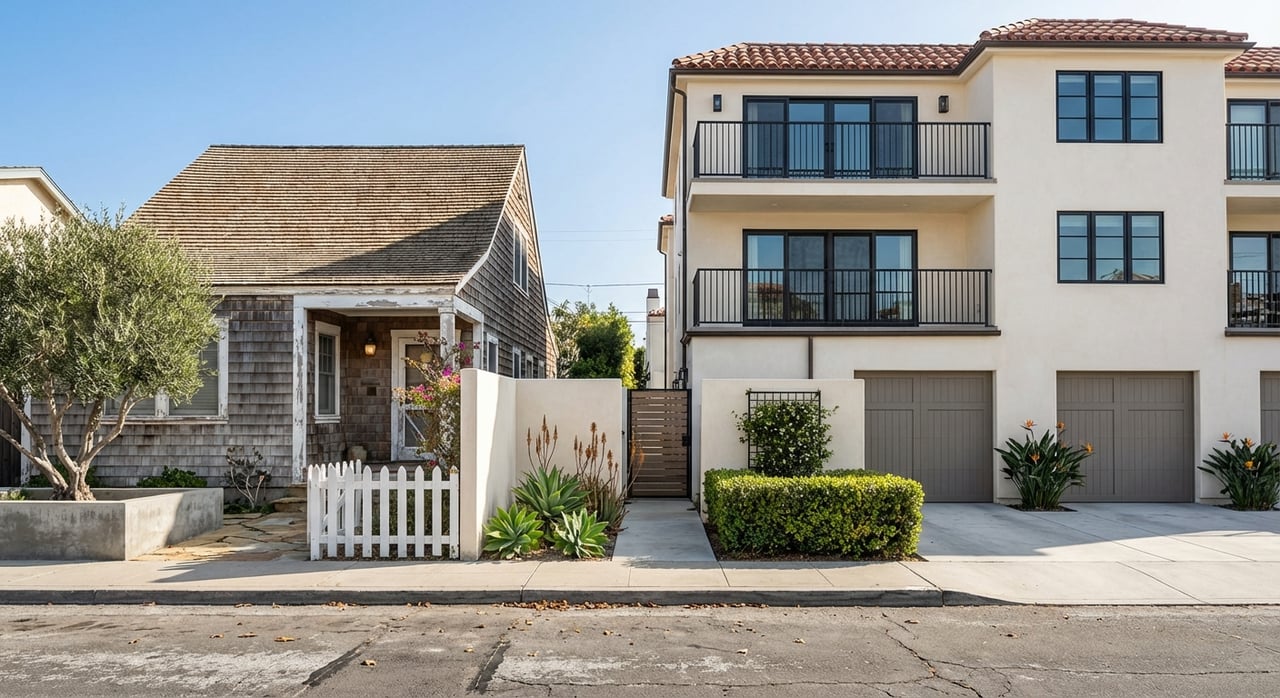
You love the idea of waking up a short stroll from Main Beach, grabbing coffee on Forest Avenue, and leaving the car at home most days. The Village in Laguna Beach makes that lifestyle possible, but the right home type matters. Should you choose a low‑maintenance condo or a character‑rich cottage? In this guide, you’ll see how each option fits daily life, costs, rental rules, parking realities, and long‑term risk so you can buy with confidence. Let’s dive in.
The Village at a glance
The Village is downtown Laguna’s walkable core around Main Beach and the Forest Avenue corridor. Shops, galleries, and dining are steps apart, which is a big quality‑of‑life win if you value convenience and time outside.
It is also a premium coastal market. Citywide medians trend in the multi‑million range, with recent snapshots around 2.9 million and Village subareas often higher. Prices flex with micro‑location, ocean proximity, views, parking, and whether the property is a detached cottage or a condo.
Condo living in The Village
What you gain with a condo
- Lower exterior maintenance thanks to HOA coverage for roof, exterior, and common areas.
- Lock‑and‑leave convenience for second‑home use.
- Often better building amenities, such as secure entry, elevators, and shared outdoor spaces.
- Walkable access to the beach, dining, and galleries that supports a car‑light lifestyle.
- Potentially newer systems and seismic standards compared with older cottages.
What to watch with condos
- HOA rules and finances drive cost and flexibility. California’s Davis‑Stirling Act sets standards for reserves, disclosures, and governance. Review those details using a practical primer like this overview of Davis‑Stirling HOA basics.
- Monthly dues vary widely. In the Village, centrally located complexes can range from a few hundred dollars to much higher in oceanfront buildings. Always confirm what dues cover and whether special assessments are planned.
- Parking is precious. The municipal code ties vehicle limits for licensed short‑term rentals to on‑site spaces, and guest parking on residential streets that serve homes is restricted. See how the municipal code addresses zoning, occupancy, and parking.
- Small new units may include fewer parking stalls by design. The city’s 2025 infill updates reduced minimums for very small, transit‑proximate homes, which affects expectations in mixed‑use or above‑retail developments. Explore the infill housing regulations.
- Short‑term rental potential depends on zoning and permits. Not all downtown parcels qualify, and licensing is now required citywide.
Cottage living in The Village
What you gain with a cottage
- Privacy and character, often with outdoor space for gardens, pets, or al fresco dining.
- A detached footprint that feels more home‑like and flexible for daily life.
- The opportunity to preserve or thoughtfully modernize historic charm.
- Street‑to‑sand proximity that can make everyday routines feel like vacation.
What to watch with cottages
- Older systems may require updates. Expect to evaluate plumbing, electrical, foundations, termite or wood‑rot, and potential seismic work.
- Coastal hazards and insurance. Use FEMA’s tool to view flood zones by address on the Flood Map Service Center, and review earthquake considerations through the state’s guide to earthquake insurance basics. These factors can influence cost and future permitting.
- Parking can be tight at vintage properties. Verify deeded or on‑site spaces and local street rules before you buy.
- Short‑term rental is generally not allowed in standard residential zones. Only specific commercial or downtown districts allow STRs with permits, and some homes may be legal nonconforming.
Short‑term rental reality in Laguna Beach
Laguna Beach has a strict two‑part framework: zoning plus licensing. Only certain commercial, mixed‑use, and downtown districts allow short‑term lodging, and even then you need approvals and a City Short‑Term Lodging Unit License. The city adopted a new licensing ordinance effective July 1, 2025, with enforcement beginning October 1, 2025. Get the full picture on the city’s short‑term lodging program and confirm any parcel’s zoning and permit status in the municipal code.
Key caps and operating rules to know:
- Conversion caps include a citywide limit of 300 total STR units and a district cap of 20 percent of allowable rental units in permitted zones, plus a separate allowance for home‑share units.
- Overnight occupancy is limited to two persons per bedroom, and permits must state maximum vehicles tied to on‑site parking.
- The Transient Occupancy Tax is 12 percent and the Laguna Beach Tourism Marketing District adds 2 percent, for a combined 14 percent on short‑term stays that hosts must collect and remit. Owners and platforms also face reporting and posting requirements.
Bottom line: STR potential is a zoning and permit question. Verify it before you underwrite any income.
Parking and mobility in the Village
- On‑site parking drives convenience and STR compliance. Do not assume street parking is available for guests on residential streets that serve homes.
- Newer small units near transit may have fewer required stalls due to the city’s infill standards. Decide if walkability, rideshare, or e‑bikes offset limited parking for your lifestyle.
- Public options exist downtown, including metered and pay‑station parking, but they are not a substitute for deeded spaces if you plan to host guests.
Cost snapshot and value drivers
- Market context: Citywide medians hover around the multi‑million mark, with The Village often trending higher due to proximity to the beach and amenities.
- Condos: Small one‑bedroom condos in central Village areas commonly land in the low‑ to mid‑seven figures in active periods. HOA dues vary significantly by building and services provided.
- Cottages: Dated one‑ to two‑bedroom bungalows often range from the mid‑seven to low‑eight figures depending on lot, parking, and upgrades. Architecturally significant or oceanfront homes price materially higher.
- What moves value: ocean views, private parking or garage count, outdoor space, building quality, and whether STR is legally permitted with current licensing.
Due‑diligence checklist for any Village buy
Use this quick list to protect your time and capital.
- Zoning and STR status. Confirm parcel zoning and whether any Administrative or Conditional Use Permit exists for short‑term lodging. Start with the municipal code portal and the city’s short‑term lodging program page.
- HOA health. For condos and townhomes, request CC&Rs, bylaws, rules, the latest budget and reserve study, board meeting minutes, insurance certificates, and any special assessment history. Review under the framework outlined in this Davis‑Stirling summary.
- Parking proof. Verify deeded or assigned stall numbers, garage dimensions, and guest parking policies. If you plan STRs, confirm on‑site stalls match the vehicle limit in the permit.
- Coastal and flood risk. Pull the address on FEMA’s Flood Map Service Center. Ask for any elevation certificates and shoreline permitting history if applicable.
- Earthquake and wildfire. Request retrofit history and relevant contractor or engineer reports, and get a California Earthquake Authority premium indication using the state’s consumer guide.
- STR compliance files. If buying a licensed STR, request the current license, proof of tax remittance, the nuisance‑response plan, complaint logs, and any violation notices. Licenses may not transfer automatically upon sale.
Which fits your lifestyle?
Choose a Village condo if you want low exterior maintenance, amenities, and the ability to lock and leave with ease. You will trade some privacy and outdoor space for simplicity and walkable access.
Choose a Village cottage if you value detached living, private outdoor areas, and vintage charm. Plan for more hands‑on maintenance and a deeper look at coastal hazards and parking.
Either way, aligning the property to your day‑to‑day rhythm and risk comfort is the goal. If you want help weighing specific addresses, neighborhood nuances, and real monthly costs, connect with our team. Our counsel is based on lived‑in local knowledge and careful transaction stewardship.
Ready to compare real options and run the numbers on your shortlist? Reach out to Domaine Luxury Properties for curated guidance and a private, concierge‑level consult tailored to your goals.
FAQs
Can I run an Airbnb from a Village condo?
- Maybe. STRs are allowed only in specific commercial and downtown zones and require city permits and a City Short‑Term Lodging Unit License with operational limits. Confirm parcel zoning and permit status before buying for STR income.
Do condos mean zero maintenance?
- No. Condos shift exterior and common‑area work to the HOA, but you still pay monthly dues and may face special assessments. Review reserves, budgets, and rules under California’s Davis‑Stirling framework.
What about guest parking if I rent short term?
- The code ties allowed guest vehicles to on‑site parking, and guests cannot park on residential streets serving homes. Verify the unit’s deeded or assigned stalls match permit limits.
Are Village cottages risky because of coastal hazards?
- Proximity to the beach can increase exposure to storm surge, wave run‑up, and long‑term sea‑level rise. Use FEMA flood maps and Coastal Commission guidance context to assess site‑specific risk and likely permitting constraints.
What taxes apply to short‑term rentals in Laguna Beach?
- Hosts must collect and remit a 12 percent Transient Occupancy Tax plus a 2 percent tourism district assessment on short‑term stays, along with required filings under the city’s short‑term lodging program.